


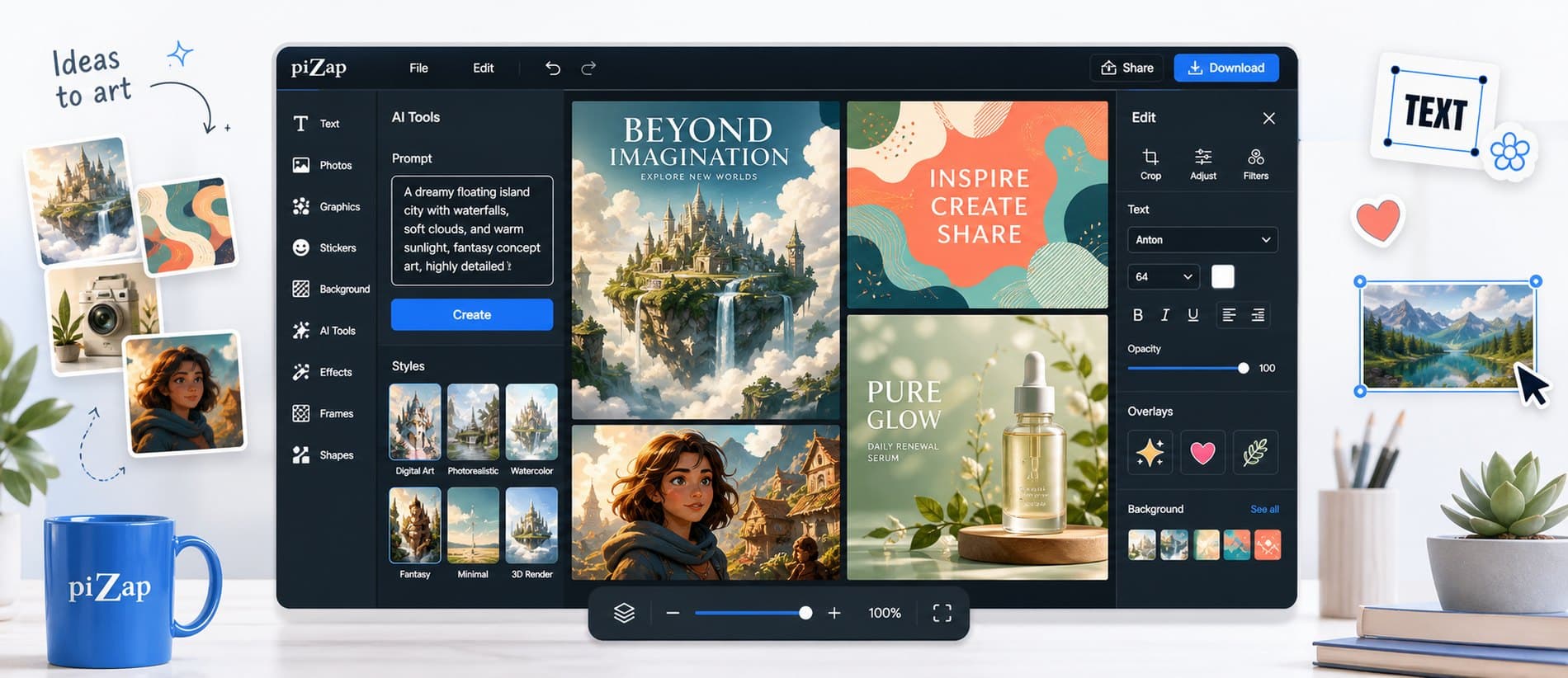
In piZap, you can start AI image ideas quickly in a browser workflow. Start with a prompt, style direction, uploaded image, or blank canvas, choose a direction, and keep shaping it until it feels right for the final use.
Lead with the part people should notice first. From there, use AI prompt ideas, style starters, image editing, text, overlays, stickers, backgrounds, and templates to add personality, clarify the message, and keep the whole design feeling connected.
Write the prompt around the final use first, then choose the format after you know whether the image will become a post, card, avatar, poster, or thumbnail.
When you are ready to create, open piZap with one example direction in mind. Try a few variations, compare what works, and save the version that best fits your audience and format.
Step by step
From first idea to finished design
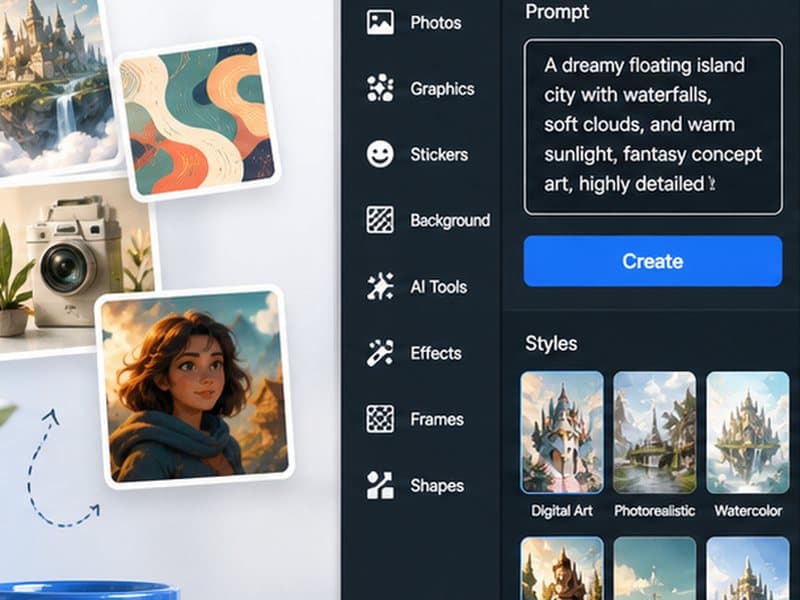
Start with a prompt, style direction, uploaded image, or blank canvas. Choose a template or canvas that matches where the finished design will appear.
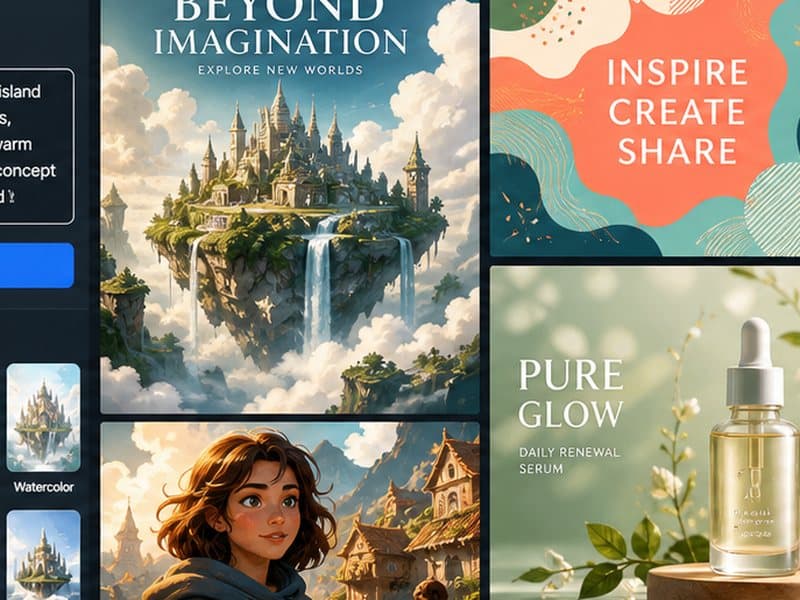
Build the main visual around the part people should notice first. Add your photo or idea, set the crop, write concise text, and use AI prompt ideas, style starters, image editing, text, overlays, stickers, backgrounds, and templates where they improve the design.
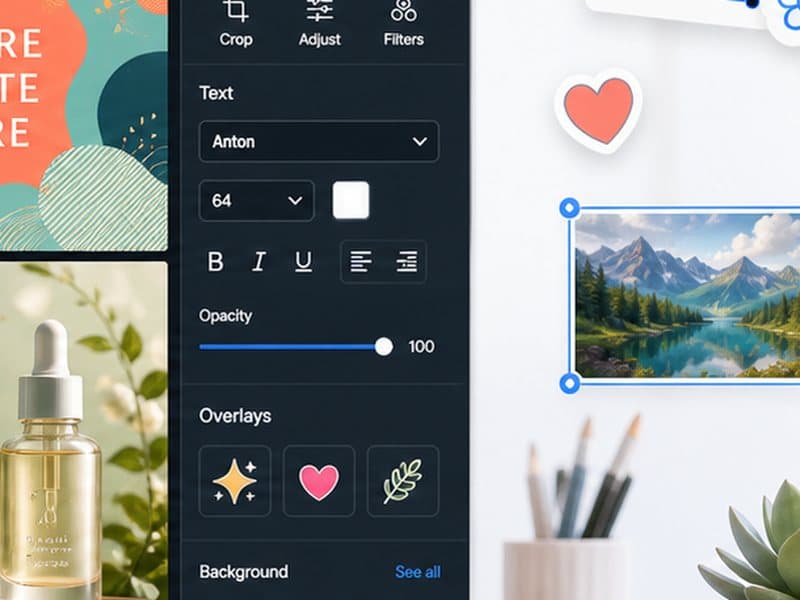
Review the result at the size people will actually see it, then save it or adapt another version for a related format.
Start with what you want to make
Begin with a prompt, style direction, uploaded image, or blank canvas, choose the direction that feels most promising, and shape it around where the finished design will be shared, posted, printed, or saved. You can refine the details as the idea takes shape.
Make it your own
- Prompt-based art starters
- Social post concepts
- Avatar backgrounds
- Poster-style graphics
Details that make the design work
- Write the prompt around the final use first, then choose the format after you know whether the image will become a post, card, avatar, poster, or thumbnail.
- Describe the subject, setting, mood, and intended use before adding style words.
- Leave space for titles or captions if the image will become a social graphic.
- Use piZap editing tools to crop, add text, and bring the AI idea into a finished layout.
- Keep one style direction per project so the finished image feels intentional.
Bring it together in piZap
Write the prompt around the final use first, then choose the format after you know whether the image will become a post, card, avatar, poster, or thumbnail. Open a template or bring your own image into piZap, make the main creative choice first, and then add text, stickers, effects, or backgrounds where they help the idea come through.
Keep creating with piZap
Ready when you are
Bring your idea to life in piZap
Open the editor with your idea or image, try a few directions, and shape the result until it feels ready for the people and place you have in mind.
Create with piZap